
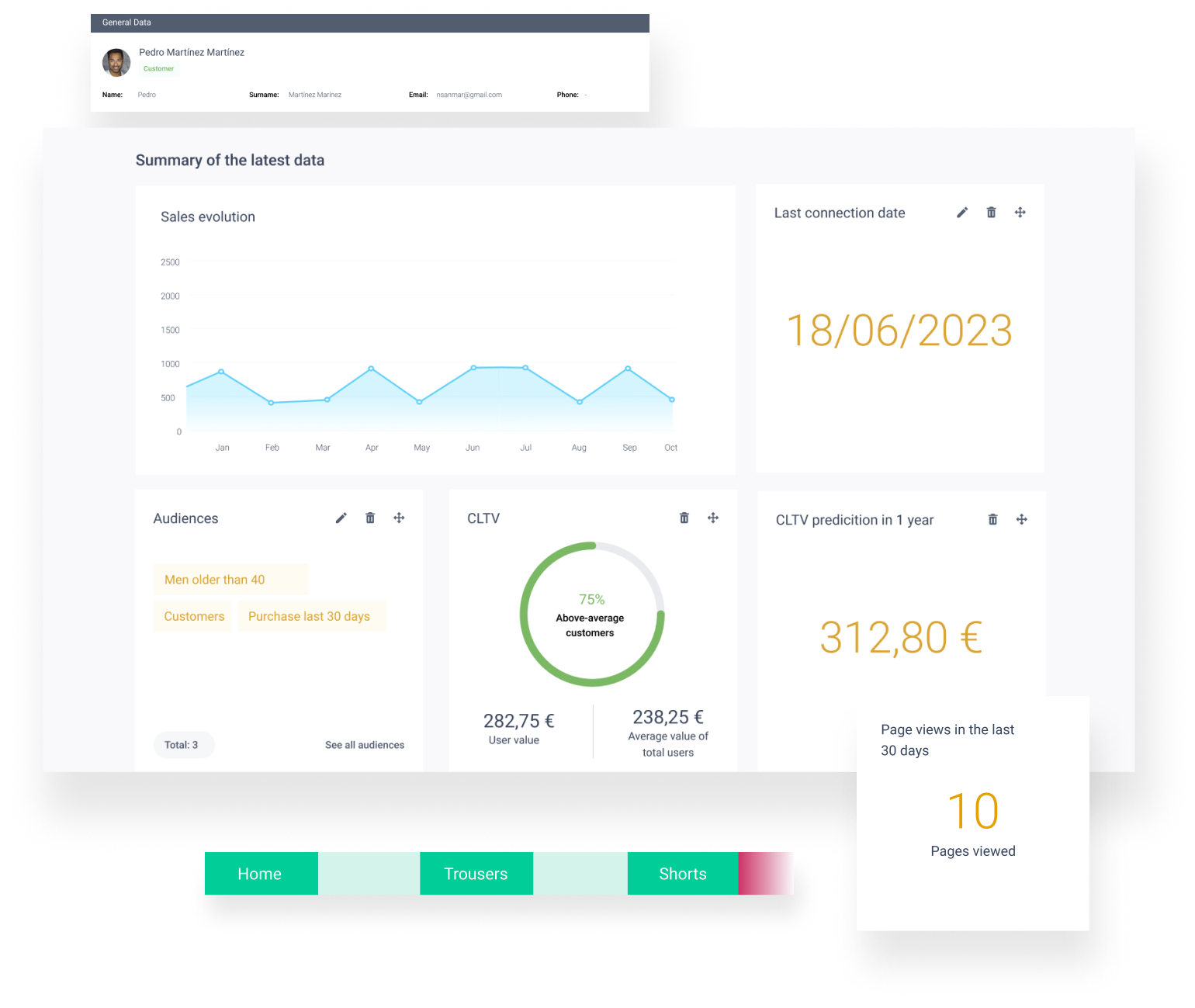
Your customer is scattered across five systems
The CRM has one snapshot, ecommerce another, the store another and loyalty yet another. Each team looks at a piece and no one sees the person. Customer 360 brings all the pieces together into a living record per customer.
Three steps, from data to the complete customer
One record per customer, their whole history
Each customer's resolved identity with their online and in-store purchases, interactions, consents and full history. No matter where they came in: it's the same person, and now they are in your data too.
Metrics that explain the customer
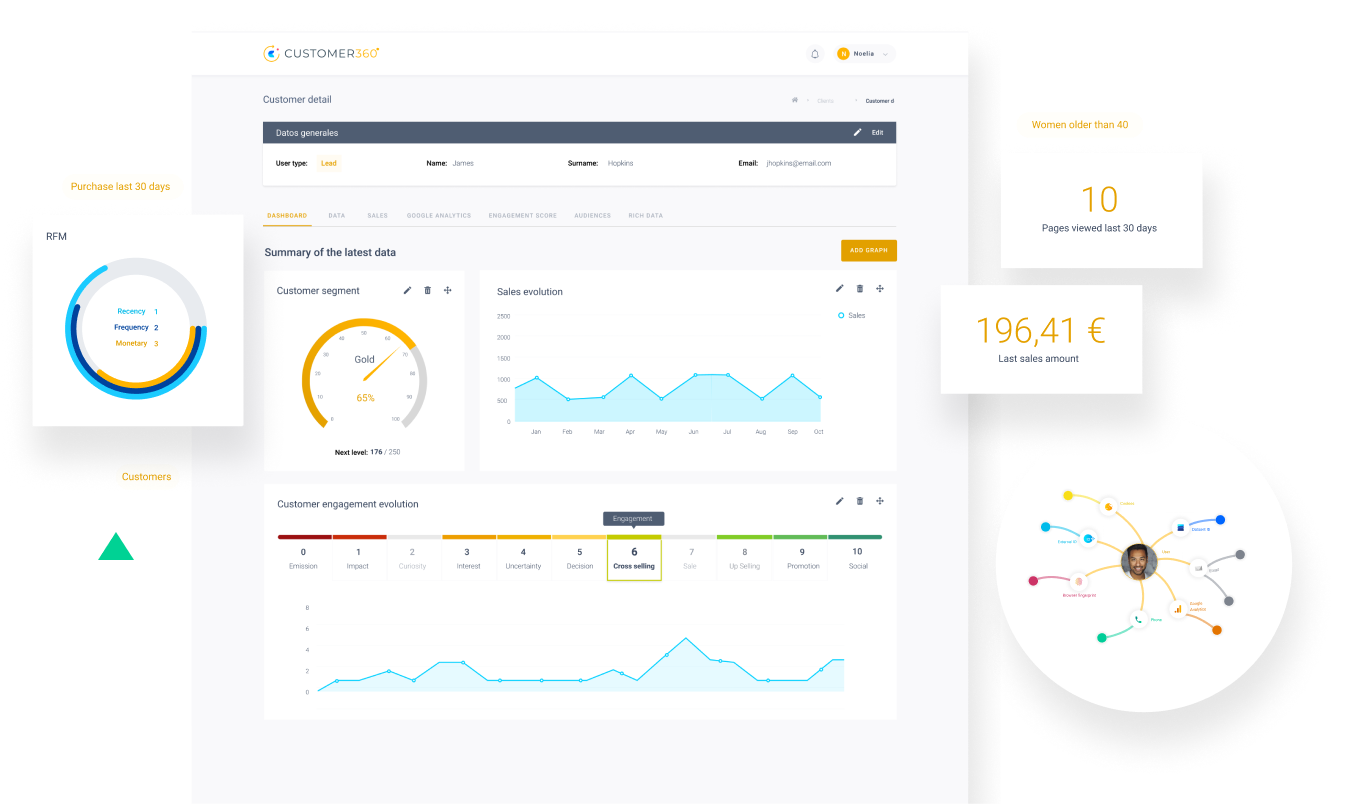
RFM, purchase frequency, average ticket, engagement, preferred channel: each profile comes with the metrics that explain who they are and how they behave. And with a per-user configurable dashboard, so each team highlights what matters to them.
What they'll do next, in their record
Purchase propensity, churn risk and estimated lifetime value, computed by FLYDE's models and visible customer by customer. Your team doesn't just see what the customer did: it sees what they're about to do.
People and companies, no trade-off
If you sell to consumers and to companies, Customer 360 gives you both views on the same data: the person record and the account record, with their contacts, sites and aggregate value. Without duplicating platforms.
What's inside each record
Real-time single profile
Identity resolved and updated with every interaction, on and offline.
Activity timeline
Purchases, visits, emails and contacts on a timeline per customer.
RFM and value metrics
Recency, frequency and monetary, average ticket and CLTV in each profile.
AI predictions
Churn, propensity and future value, computed and visible per customer.
Customer segments
Which audiences each customer belongs to and why, at a glance.
Configurable dashboard
Each user highlights the metrics that matter to their strategy.
Put the results to work in the rest of the apps
Customer 360 is the knowledge: what you know about each customer turns into audiences, reports and trends in the rest of the apps.
 Core
Core Market
 Trends
 Analytics